
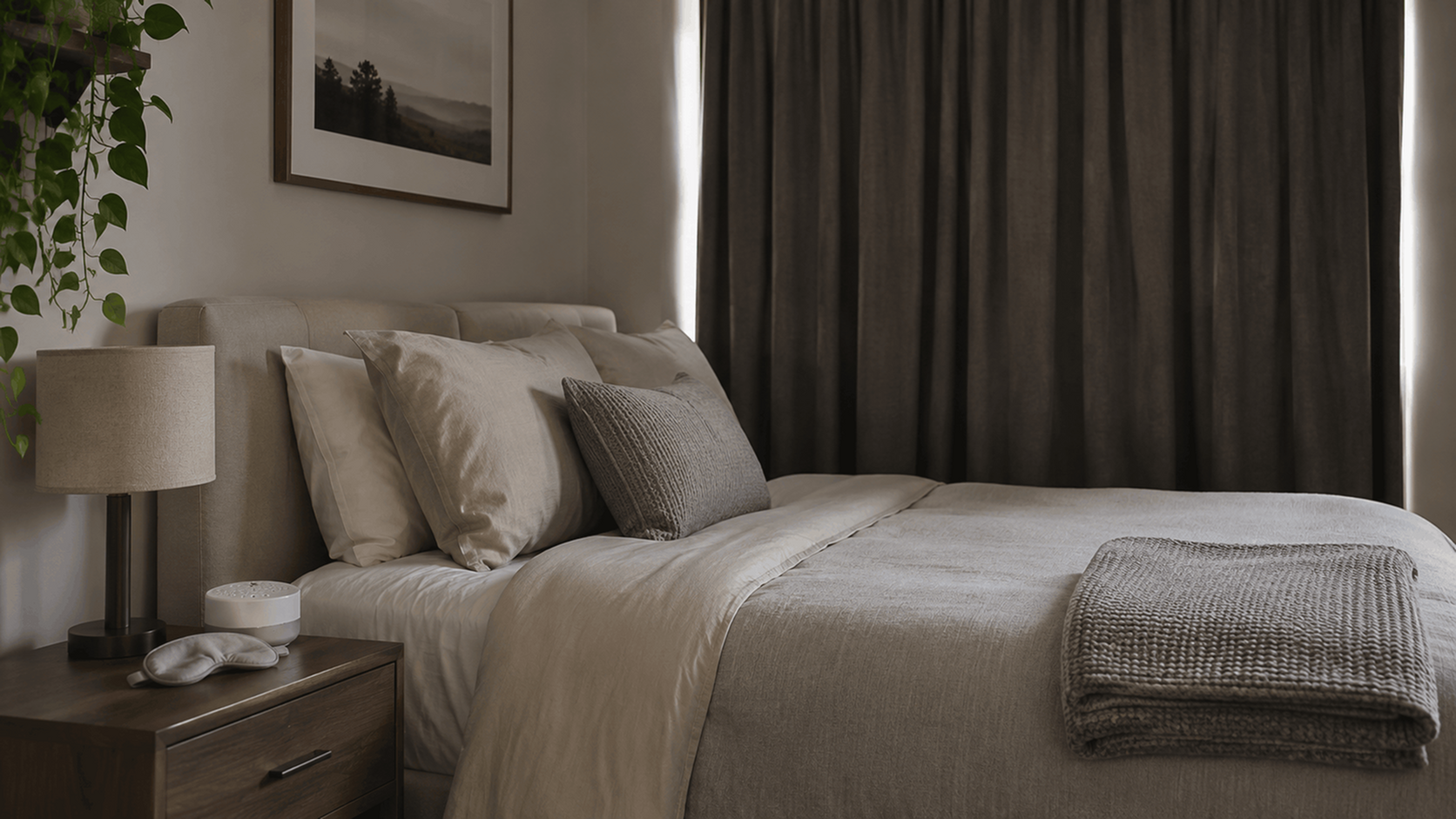
Quick Answer: Night shift sleep is hard because daylight, noise, and a flipped schedule work against your body clock. The fix is a dark, quiet, cool room used only for sleep, plus a steady bedtime, even on days off. The CDC's NIOSH training describes this same sleep setup, and it works in a studio too.
Night shift sleep rarely happens on a neat schedule. You clock out as the neighborhood wakes up, and the room you rely on during the day may still be bright, loud, and warm. Oslo on 6th serves renters in Aurora, Colorado, with studio homes, so the sleep plan has to work inside one room. Here is how to set it up, using CDC guidance and a few practical choices you can make before you move in. Compare the studio floor plans to see the space you would be working with.
What Does Night Shift Sleep Need From Your Home?
Good sleep happens in a room that is dark, quiet, cool, and comfortable. The CDC's NIOSH training uses those four words, and they matter even more when you sleep during daylight hours. Your body clock favors darkness, so a bright, noisy bedroom at 9 a.m. works against you. Fix light, sound, and temperature first, then build habits around them.
Block Out the Light
Light is the biggest problem for daytime sleep. The CDC recommends room-darkening shades or heavy, lined draperies, and it warns that blinds can let too much light into the room. Check the edges of each window, because thin gaps around the frame let in daylight too. Put a draft stopper under the door or turn off hall lights, so light does not slip in from outside the bedroom. An eye mask helps as well, as long as you keep it on for the whole sleep.
Control Noise and Temperature
Traffic, neighbors, and pets can wake you mid-morning. Earplugs or a fan or white noise machine can mask those sounds. Ask roommates, family members, and pets to stay quiet near the bedroom during your sleep window. Set your phone to do not disturb, allow emergency calls from a short list of contacts, and turn off non-essential alerts. Keep the room cool, and add covers if you feel chilly. People differ in what feels comfortable, so adjust until it feels right for you.
How Do You Set Up a Studio for Daytime Sleep?
A studio puts the bed, kitchen, and living area in one room, so every activity competes for the same space. Give the apartment bedroom its own zone, keep work and screens away from it, and use the bed for sleep alone. The table below links each sleep factor to a practical fix.
| Sleep factor | Why it matters | Practical fix |
|---|---|---|
| Light | Daytime sun reaches the bed directly | Room-darkening shades or lined draperies, plus a door draft stopper |
| Noise | Traffic, neighbors, and phones wake you | Earplugs, a fan or white noise machine, and a do not disturb setting |
| Temperature | A warm room makes sleep light and short | A cool room with covers you can add or remove |
| Routine | Your brain links the bed with alertness if you work or watch TV there | Use the bed for sleep only |
| Clock | Checking the time keeps you awake | Turn the clock face away from you |
A studio needs a little more planning than a larger home. A rug, a folding screen, or a tall shelf can mark the sleep zone without taking up much floor space. Before you move in, ask how the window coverings are set up, since the amount of light that gets through matters more than anything else on this list.
What Is the Best Sleep Schedule for Night Shift Workers?
The best schedule is one you can repeat. Keep your sleep times as consistent as possible across a block of shifts, and plan sleep into the day rather than squeezing it in between errands. Good sleep patterns for night shift workers start with a protected window, so treat that time like an appointment. A short nap before a shift can help you stay alert, though it should not replace a full sleep period.
- Pick a daytime sleep window and protect it from errands and appointments.
- Wear sunglasses on the drive home, and avoid bright light before you sleep.
- Keep caffeine out of the final hours before bed.
How Much Sleep Does a Night Shift Worker Need?
Most adults need seven or more hours of sleep a day. A CDC analysis of 2010 National Health Interview Survey data found that about 44 percent of night shift workers got too little sleep, compared with about 29 percent of day shift workers. Night shift sleep tends to come up short, and that gap is why a sleep-ready home matters. Small changes to light and noise can help you get more of the rest you need.
Making Night Shift Sleep Work at Home
Night shift sleep improves when your home is set up for the job. Darken the room, quiet the noise, keep it cool, and protect a steady sleep window. If you are weighing studio homes in Aurora, the Oslo on 6th homepage has more about the community.
Frequently Asked Questions
1. Are 1 bedroom apartments better for night shift sleep?
Not always. A separate bedroom makes it easier to keep light and noise away from your sleep, but a studio can work when you plan a dedicated sleep zone. Focus on darkness, quiet, and a cool temperature first. If you are searching for 1 bedroom apartments near me, compare the sleep zone in each layout, not just the number of bedrooms.
2. Are blackout curtains better than blinds for daytime sleep?
The CDC says blinds can let too much light into the bedroom and recommends more opaque coverings for anyone sleeping during daylight. Room-darkening shades and heavy, lined draperies are the options it names. Blackout curtains can achieve the same effect, so look for fabric that blocks light and check the edges of the window.
3. What temperature helps night shift workers sleep during the day?
Keep the room cool and comfortable. The CDC lists a cool bedroom as part of a good sleep environment, but people differ, so adjust until you feel neither too warm nor too cold. Many people find the 60s Fahrenheit comfortable. Keep covers nearby that you can add or remove as needed.
4. Should night shift workers use melatonin to sleep?
Melatonin may help some people sleep during the day, but timing and dose matter, and taken at the wrong time it can make sleep worse. Talk with a doctor or sleep specialist before you start. They can advise whether it fits your situation and how to use it safely.
5. What are the signs of shift work sleep disorder?
Shift work sleep disorder usually shows up as trouble sleeping when you need to, or extreme sleepiness while you are awake, tied to a work schedule that conflicts with your body clock. Watch for these signs:
- Trouble falling or staying asleep during the day
- Strong sleepiness during shifts or on the drive home
- Symptoms that continue for three months or longer
If these signs last, see a doctor or sleep specialist.