
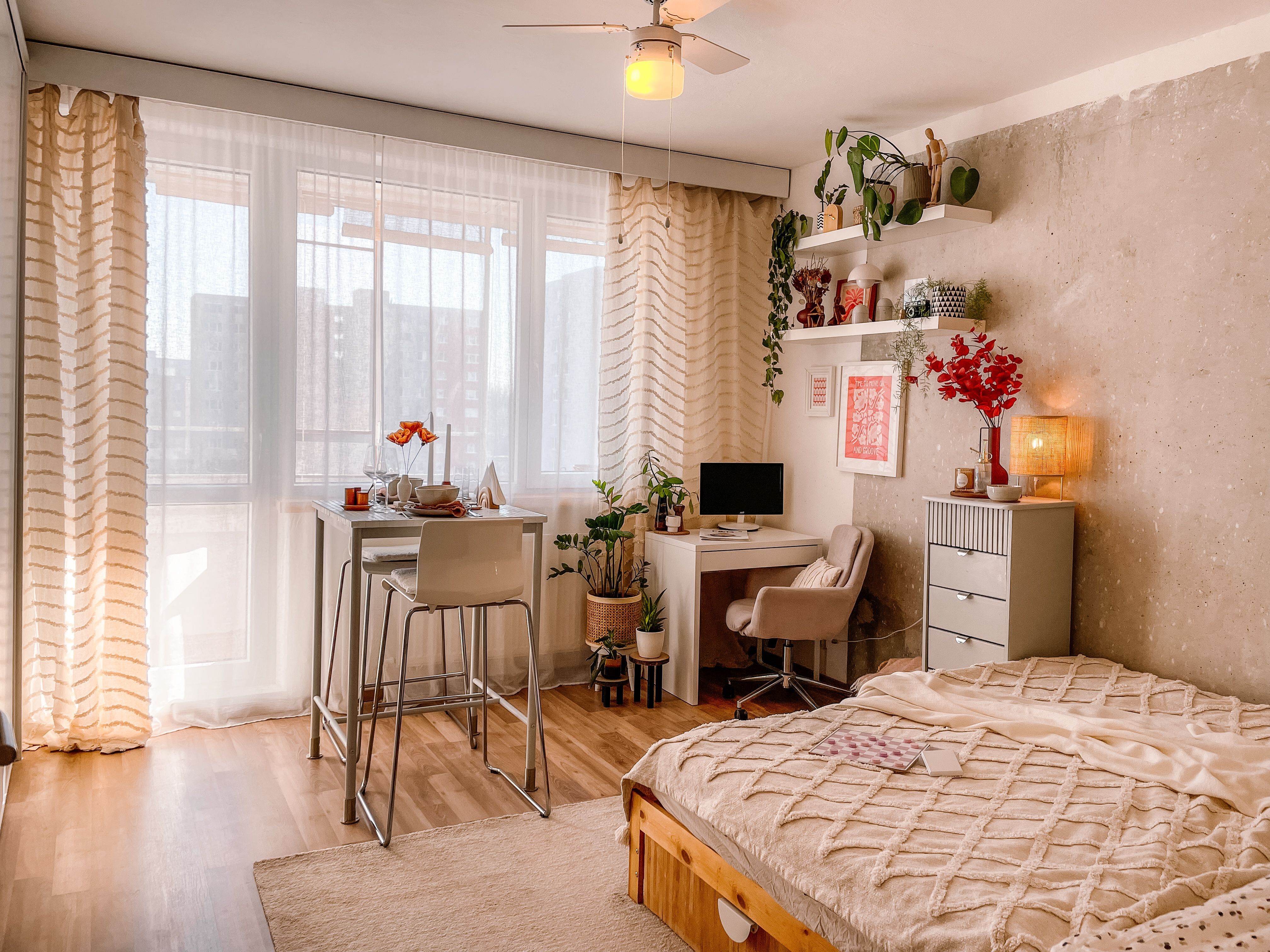
Quick Answer: How to make a studio work as both bedroom and study space comes down to zoning. Put the desk where the daylight is, turn the bed away from it, and add one visual break such as a curtain, a rug or an open shelf. Keep work gear off the bed so the room still feels restful at night.
One room has to do two jobs. Learning how to make a studio work as both bedroom and study space matters most for students, nurses on rotating shifts and remote workers who can't close a door on the workday. This guide comes from the team at Oslo on 6th, serving Aurora, Colorado renters with brand new studio apartments close to RTD light rail.
What Is a Bedroom and Study Studio Apartment Layout?
A bedroom and study studio apartment layout is a single room arranged into two clear zones: one for sleep and one for focused work. Each zone gets its own lighting, its own furniture and a boundary you can see. The goal is simple. When you sit at the desk, the bed should be out of your sightline.
That boundary doesn't need to be a wall. In most studios it's a change in direction, a shift in lighting, or a piece of furniture that does two jobs at once.
Start With the Studio Apartment Desk
The desk decides everything else. Place it first, then fit the bed around it. A studio apartment desk works best beside a window with the screen at a right angle to the glass, which gives you daylight without glare. Face the desk toward a wall or a divider. Never toward the bed.
Posture counts as much as position. The Occupational Safety and Health Administration's Computer Workstations eTool recommends keeping the top of the monitor at or just below eye level, your lower back supported and your feet flat on the floor. A laptop balanced on a duvet meets none of those. If you study for more than an hour at a time, a real chair and a raised screen are worth the floor space they take.
Some studios solve the placement question for you. The studios at Oslo on 6th come with a built-in desk, so the work zone is already fixed and the only decision left is where the bed goes. You can compare the layouts on the studio floor plans page before you tour.
Studio Bedroom Ideas That Protect Your Sleep
Sleep is the half of the room people forget to plan. The Centers for Disease Control and Prevention says adults aged 18 to 60 need 7 or more hours a night, and its sleep guidance lists two habits that are harder in a studio: keeping the bedroom quiet and relaxing, and turning off electronic devices at least 30 minutes before bedtime.
The studio bedroom ideas that help most are small ones:
- Push the bed against the wall farthest from the entry door.
- Give the bed its own warm lamp, separate from the desk light.
- Close the laptop and switch off the desk lamp when you finish for the day.
- Keep books, chargers and notes on the desk side of the room.
One honest caveat: no layout fully separates work from rest in a single room. The shutdown routine does more than any piece of furniture.
Which Room Divider Ideas Work Best in a Studio?
The best room divider ideas for a studio are the ones that block the view of the bed without blocking daylight. A curtain, an open bookcase or a folding screen all work, and each one costs you something different in floor space, sound or flexibility. Pick based on the tradeoff you can live with.
| Divider | Best For | Tradeoff |
|---|---|---|
| Curtain on a tension rod | Renters who can't drill, and hiding the bed on video calls | Stops very little sound |
| Open bookcase | Adding storage and separation in one piece | Uses floor space and can shade the bed side |
| Folding screen | Layouts that change when guests visit | No storage, and it can tip |
| Area rug under the bed | The smallest studios | Visual only, the bed stays in view |
| Desk at the foot of the bed | Rooms with no space for extra furniture | Needs a clear walkway on one side |
| Curtain plus rug | Most renters, most studios | Lowest cost, nothing permanent |
Check your lease before you put a screw in a wall or ceiling. Tension rods and freestanding pieces are the safe choice in a rental, and they move with you when the lease ends.
Does a divider make a small room feel smaller? Sometimes. A solid bookcase placed between the window and the bed will darken half the studio, so keep tall pieces parallel to the window wall and leave the top shelves partly open.
Multifunctional Furniture for Small Space Living
Multifunctional furniture is any piece that covers two needs in the footprint of one, and it's the fastest way to free floor area in a studio. For small space living, the pieces that matter are the ones tied to your two zones: something to sleep on that also seats or stores, and a work surface that can disappear.
- Daybed: a sofa by day and a bed at night, so the sleep zone reads as a lounge while you study.
- Storage bed: drawers or a lift-up base replace a dresser.
- Drop-leaf table: folds flat against the wall, then opens for meals or a second monitor.
- Storage ottoman: a footrest and extra seat that hides textbooks and cables.
Buy less than you think you need. Two well-chosen pieces beat six clever ones, because every item in a studio also has to be walked around.
What About Furnished Studio Apartments?
Furnished studio apartments save the cost of buying a bed and desk, which suits short stays and first apartments. The catch is flexibility: you work with the layout the furniture allows. Ask exactly which pieces are included and whether you can move or swap them. Policies differ from one community to the next, so confirm with the leasing office before you sign.
If you're searching for a studio apartment near me, tour with the two-zone plan in mind. Look for where the desk sits relative to the window, count the outlets on that wall, and check whether the bed can face away from the work area. The photo gallery and virtual tour shows how the Oslo on 6th studios handle it.
Frequently Asked Questions
1. Can you fit a desk and a bed in a small studio?
Yes. Most studios hold both if the desk goes in first and the bed is sized to what's left. A full-size bed or daybed leaves far more working room than a queen. Wall-mounted or built-in desks help most, because they use no extra floor depth and keep the walkway between the zones clear.
2. How do I separate my bed from my desk without building a wall?
- Hang a curtain on a tension rod beside the bed.
- Stand an open bookcase at the foot of the bed.
- Lay a rug under the bed only, so the floor marks the zone.
- Turn the desk so your back is to the bed.
3. Is it bad to study in the same room you sleep in?
Not if you keep the two activities apart. The CDC advises a quiet, relaxing sleep space and switching off electronic devices at least 30 minutes before bed. In a studio that means working at the desk, never on the bed, and ending each session by closing the laptop and turning off the desk lamp.
4. Where should the desk go in a studio apartment?
Beside a window, with the screen at a right angle to the glass to cut glare. Face a wall or divider instead of the bed, and stay within reach of an outlet. OSHA's workstation guidance adds that the top of your monitor should sit at or just below eye level, with your feet flat on the floor.
5. What is the best studio apartment layout for working from home?
The most reliable studio apartment layout puts the desk at the window, the bed on the far wall, and a divider or rug between them. Keep the path from the door to the kitchen clear of both zones. If the desk is built in, plan the bed position around it instead of fighting it.
Conclusion
Two zones, one boundary and a nightly shutdown routine: that's the whole method. Desk at the light, bed turned away, and furniture that earns its floor space. If you want to see how to make a studio work as both bedroom and study space in a layout with the desk already built in, get directions to Oslo on 6th in Aurora and walk through one in person.